Digital triage. What is it? What are practices doing it? Where do the rules come from?
Before drafting, one correction to the framing in your notes. The NHS material says the contract requires practices to offer online consultation and secure messaging. It does not require total triage, and it says practices should choose the system that works for their population. The article is written on that basis. I’ve also framed the “not engaging” point around keeping traditional routes open, because the NHS guidance says those routes are essential and a piece that sounds like it blames patients would likely put off the readers you most want to reach.
Digital triage: what it is, why practices are doing it, and where the rules come from
Most of us have experienced the 8am phone queue: ringing repeatedly, getting through too late, or being told there are no appointments left. Digital triage is one of the ways NHS England wants general practice to change that. It’s worth understanding what it is, why it’s happening, and what it does and doesn’t require.
What triage means
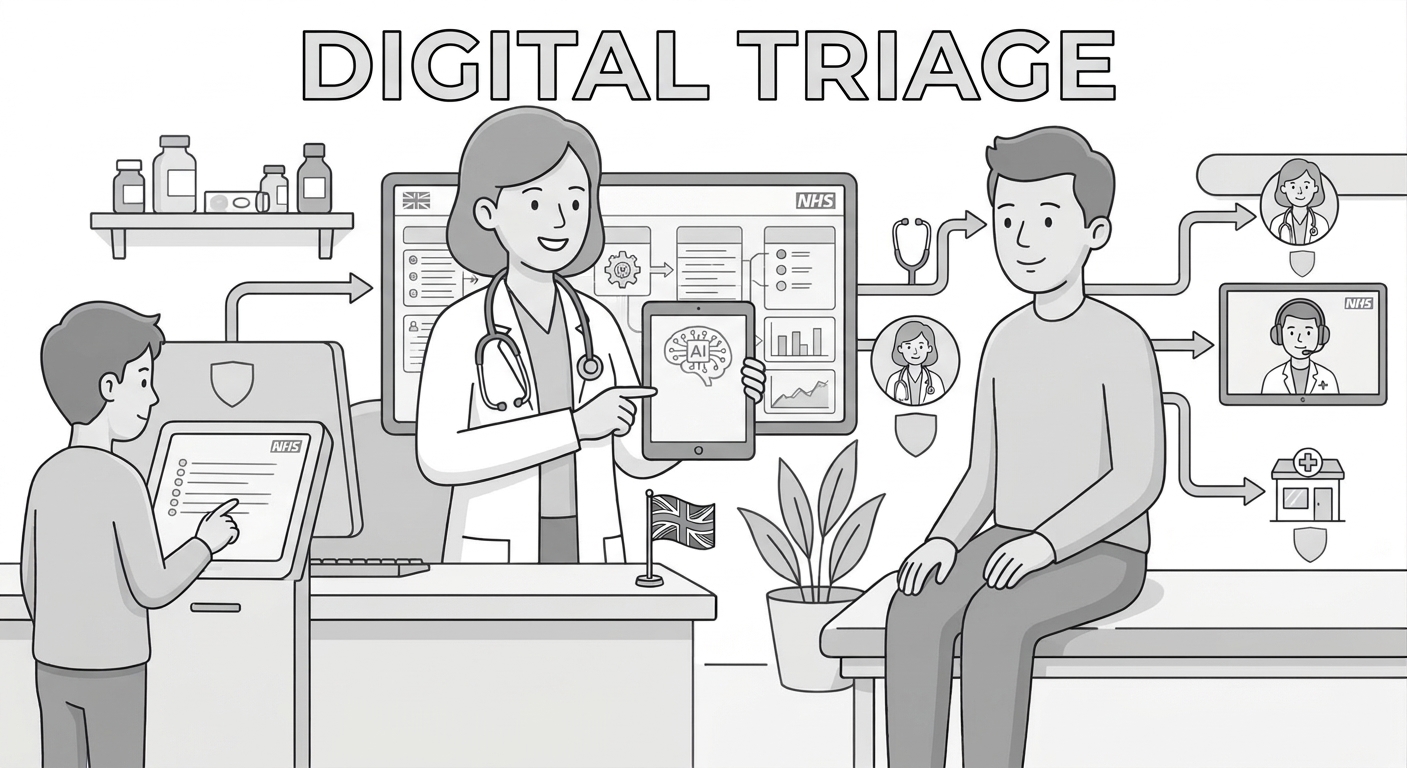
Triage is simply the process of finding out what a patient needs, how quickly they need it, and who is best placed to help. Practices have always done some version of this when someone rings or walks in. Digital triage means that some of this happens through online tools. A patient fills in an online consultation form or sends a message, and the practice reviews it, or the software sorts it, before deciding the next step. That step might be a same-day appointment, a call from a nurse, a referral, a pharmacy visit, or self-care advice.
Why it’s happening
NHS England’s Modern General Practice Model describes the aim as giving patients a choice of three routes into their practice: phone, online, or in person. The idea is that the practice collects the same structured information whichever route someone uses, then assesses need and directs them to the right person. The model moves away from first-come, first-served allocation, and it’s intended to help patients get the right care from the right person the first time, rather than through repeated calls and wasted visits.
Practices also gained experience during the pandemic, when many moved to “total triage”, where every request was screened remotely before an appointment was arranged. Since then, many have moved to blended models that mix digital tools with traditional methods.
What the rules actually require
The GP contract includes a “core digital offer”. This means practices must offer online consultation tools, secure two-way messaging, video consultations, online prescriptions, online booking, and an up-to-date online presence that links to these services. The definition was confirmed in NHS England’s 2021/22 letter to practices, and it’s now standard in most practices.
What the contract does not do is require a particular triage system. NHS England’s guidance says there is no contractual requirement for total triage, and practices are encouraged to use whatever works best for their own patients.
What’s not up for debate
Traditional routes must stay. NHS England is explicit that patients will always need telephone and face-to-face access, because removing them would make health inequalities worse. Digital triage that works well is one part of a system that still includes people who can’t or prefer not to go online.
Who it might not work for
The guidance itself lists the risks. People with poor access to technology, people with learning difficulties, and people with more complex conditions may find remote consultation a barrier rather than a help. Some vulnerable patients may be disadvantaged, and practices need ways to flag them so they reach the right person. Digital triage can also increase staff workload if it isn’t properly planned.
Practices are expected to think through privacy notices, data protection impact assessments, clinical safety, capacity, and what to do when an online system goes down. Some switch online requests off outside core hours for exactly these reasons.
What this means for patients
Digital triage makes sense when it helps people reach the right care sooner, and when the phone and in-person routes remain strong. It’s fair to ask practices how they support people who struggle with online tools, how vulnerable patients are identified, and whether phone access is improving alongside digital options.
Sources
NHS England, Digitally enabled triage
NHS England, Modern general practice model
NHS England, Supporting general practice in 2021/22 (letter to GP practices, 21 January 2021)